Cognitive Behavioral Therapy for Addiction
CBT is one of the most effective therapies for addiction. Learn how it works and what to expect in treatment.
What is Cognitive Behavioral Therapy (CBT)?
Cognitive Behavioral Therapy is a structured, evidence-based psychotherapy that focuses on identifying and changing negative thought patterns, beliefs, and behaviors that contribute to substance use. Developed by Dr. Aaron Beck in the 1960s and adapted for addiction treatment by Dr. Kathleen Carroll, CBT is one of the most rigorously studied and consistently effective treatments for substance use disorders.
The National Institute on Drug Abuse identifies CBT as one of the most effective behavioral therapies for addiction. Meta-analyses show that CBT produces meaningful reductions in substance use, with effects that persist and even improve after treatment ends — a phenomenon known as the "sleeper effect."
How CBT Works for Addiction
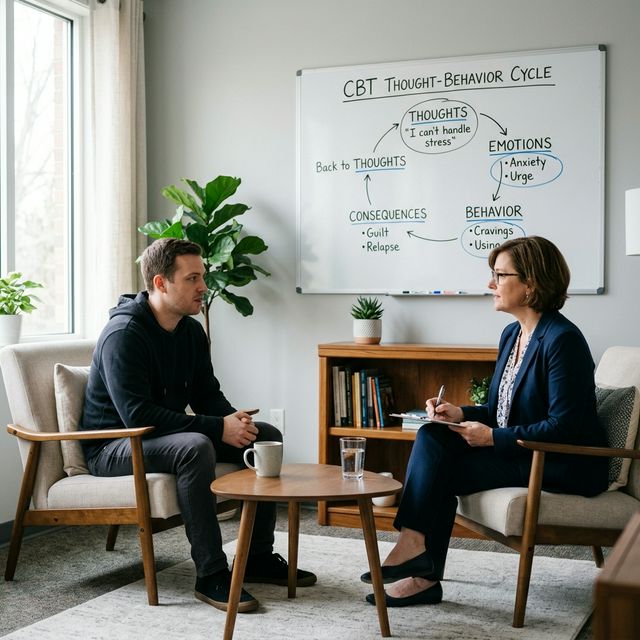
CBT is based on the principle that thoughts, feelings, and behaviors are interconnected. Substance use often begins or continues because of distorted thinking patterns ("I can't cope without it," "Just one won't hurt," "I deserve this after a hard day"). CBT teaches individuals to:
- Identify triggers: Recognize internal (emotions, thoughts) and external (places, people, situations) cues that trigger cravings
- Challenge cognitive distortions: Examine and reframe automatic thoughts that lead to substance use
- Develop coping skills: Build a toolkit of healthy responses to cravings, stress, and high-risk situations
- Practice behavioral experiments: Test new behaviors in real-world situations and evaluate results
- Build relapse prevention plans: Create specific, actionable plans for managing future high-risk scenarios
The CBT Treatment Process
Phase 1: Assessment and Goal Setting (Sessions 1–2)
The therapist conducts a functional analysis of your substance use — examining the situations, thoughts, and feelings that precede, accompany, and follow use. Together, you establish clear, measurable treatment goals.
Phase 2: Skill Building (Sessions 3–12)
The core of CBT involves learning and practicing specific skills:
- Thought records: Writing down automatic thoughts that trigger cravings and challenging them with evidence
- Coping card creation: Developing wallet-sized cards with personalized coping strategies for high-risk moments
- Role-playing: Practicing refusal skills and assertiveness in simulated social situations
- Behavioral activation: Scheduling enjoyable, substance-free activities to rebuild the brain's reward circuitry
- Relaxation training: Learning progressive muscle relaxation, deep breathing, and mindfulness techniques
Phase 3: Generalization and Relapse Prevention (Sessions 12–16)
Skills are applied to increasingly challenging real-world situations. The therapist and patient develop a comprehensive relapse prevention plan identifying personal warning signs, high-risk situations, and specific coping responses for each.
What a Typical CBT Session Looks Like
A standard CBT session for addiction lasts 50–60 minutes and follows a structured format:
- Mood and substance use check-in (5 minutes) — Review of the past week
- Homework review (10 minutes) — Discussion of between-session assignments
- Agenda setting (5 minutes) — Collaboratively choosing focus topics
- Skill teaching and practice (25 minutes) — The core therapeutic work
- New homework assignment (5 minutes) — Real-world application for the coming week
CBT Compared to Other Therapies
- vs. 12-Step Facilitation: CBT focuses on skills and self-efficacy; 12-Step emphasizes powerlessness and communal support. Both are effective; many patients benefit from both
- vs. Motivational Interviewing (MI): MI is often used before or alongside CBT to build motivation for change. CBT provides the skills once motivation exists
- vs. Dialectical Behavior Therapy (DBT): DBT adds emotional regulation and distress tolerance skills, making it particularly effective for patients with personality disorders or trauma
- vs. Contingency Management: CM provides tangible rewards for negative drug tests. Combined with CBT, the effects are greater than either alone
How Effective is CBT for Addiction?
Research consistently supports CBT's effectiveness:
- Meta-analyses show a moderate to large effect size for reducing substance use
- CBT has demonstrated effectiveness for alcohol, cocaine, methamphetamine, cannabis, and opioid use disorders
- Unlike some treatments, the benefits of CBT continue to grow after treatment ends (the "sleeper effect")
- When combined with medication-assisted treatment (MAT), CBT outcomes are even stronger
- CBT skills are portable, permanent, and applicable to future challenges — patients become their own therapists
Finding a CBT Therapist for Addiction
Look for therapists with specific training in CBT for substance use disorders. Key credentials include licensure (LCSW, LPC, PhD, PsyD), specialized training in addiction CBT, and experience with your specific substance of concern. SAMHSA's treatment locator and Psychology Today's therapist directory can help you find qualified providers.
Frequently Asked Questions
- How long does CBT treatment for addiction last?
- Standard CBT for addiction runs 12 to 16 weekly sessions, each lasting 50 to 60 minutes. Some patients benefit from longer treatment (6+ months), particularly those with co-occurring mental health conditions or severe SUD. Unlike many therapies, CBT is designed to teach lasting skills — the goal is for patients to eventually become their own therapists.
- Does CBT work for all types of addiction?
- CBT has demonstrated effectiveness across a wide range of substance use disorders including alcohol, cocaine, methamphetamine, cannabis, and opioids. It is particularly effective for stimulant use disorders (cocaine, meth) where no FDA-approved medications exist. For opioid use disorders, CBT is most effective when combined with medication-assisted treatment (MAT).
- Can CBT be done online or through telehealth?
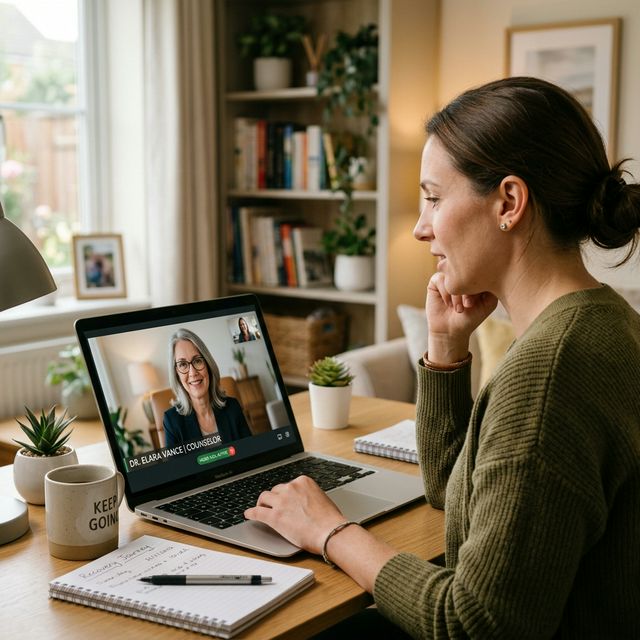
- Yes. Multiple studies have shown that CBT delivered via telehealth (video therapy) produces outcomes comparable to in-person sessions. Computer-based CBT programs (CBT4CBT) have also shown effectiveness in clinical trials. Telehealth CBT expands access for people in rural areas, those with transportation barriers, or individuals who prefer the privacy of home-based treatment.
- Is CBT covered by insurance?
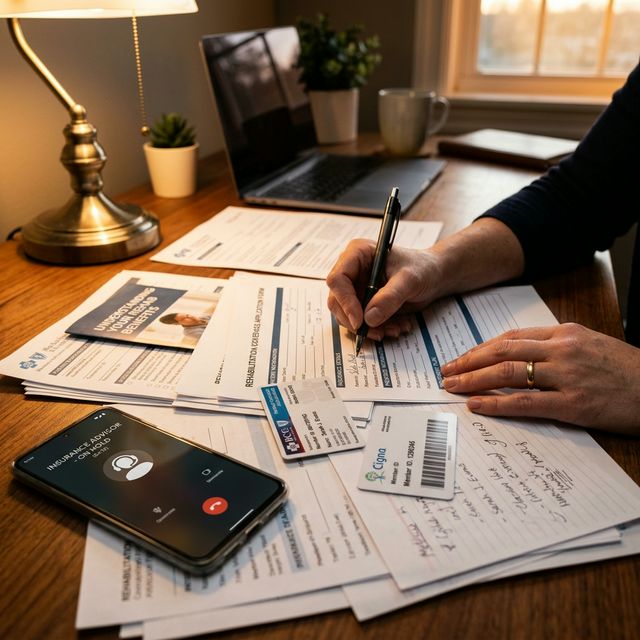
- Yes. Most private insurance plans, Medicare, and Medicaid cover CBT as a standard behavioral health benefit under the Affordable Care Act and Mental Health Parity Act. Typical out-of-pocket costs range from $0 to $50 per session with insurance. Without insurance, sessions typically cost $100 to $250 per session, though many therapists offer sliding-scale fees.
Sources & References
This article is informed by research and data from the following authoritative sources:

This article is for educational purposes only and should not be considered medical advice. Always consult a qualified healthcare provider before making decisions about addiction treatment. If you or someone you know is in crisis, call SAMHSA's National Helpline: 1-800-662-4357 (free, confidential, 24/7).