Wastewater Treatment Plant Project Wins National Notice
Wastewater Treatment Plant Project Wins National Notice Your tap water, local river, and town budget are tied together more tightly than most people think. A…
Wastewater Treatment Plant Project Wins National Notice
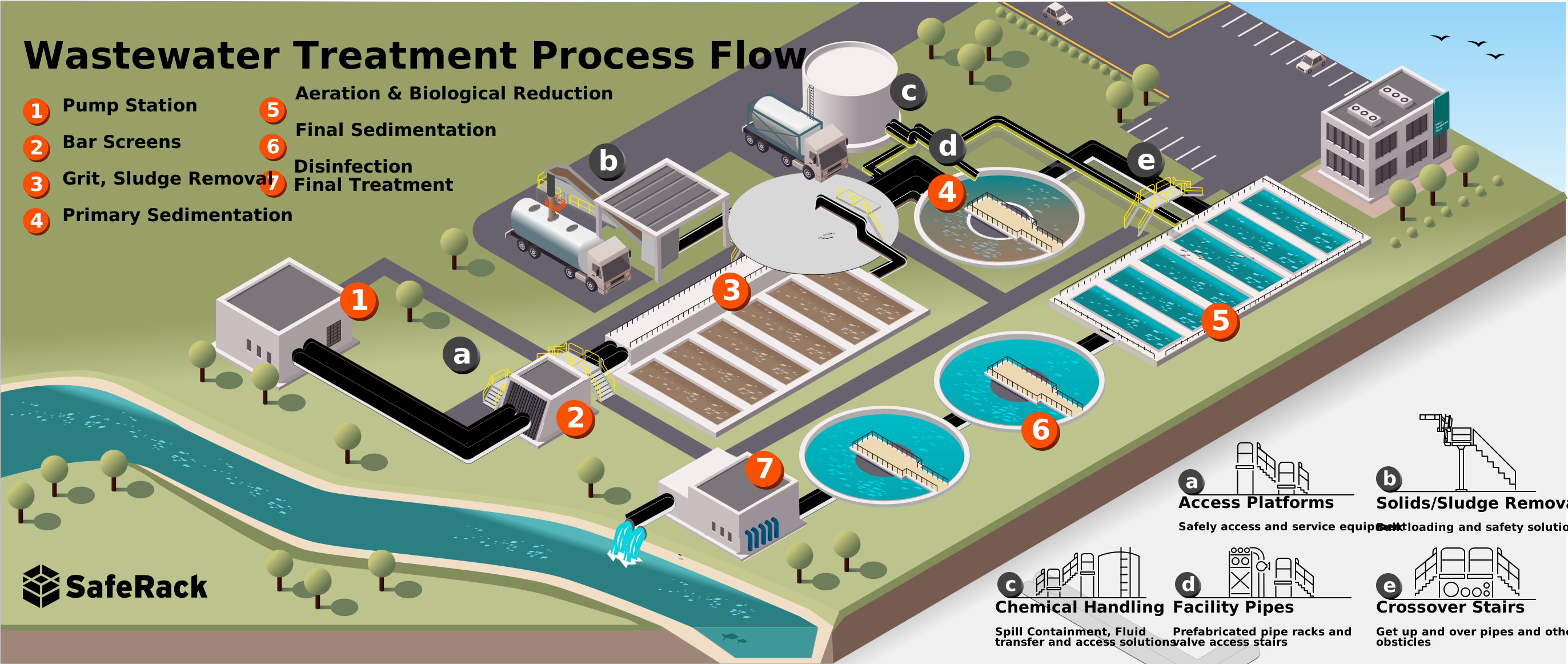
Your tap water, local river, and town budget are tied together more tightly than most people think. A wastewater treatment plant project can decide whether a community keeps growing safely or falls behind on aging pipes, permit limits, and public health needs. That is why national recognition for an Ecology-funded project in Washington deserves more than a polite nod. It points to a bigger issue facing many cities: old treatment systems are being asked to handle more people, stronger storms, and stricter water quality rules. According to the Washington State Department of Ecology, a funded wastewater treatment plant project earned national recognition in August 2026. The award matters because good treatment work is usually invisible until something breaks. And by then, residents pay the price through closures, odors, emergency repairs, or higher utility bills.
What Stands Out
- The project shows how public funding can move local infrastructure from patched-up to dependable.
- Wastewater upgrades protect rivers, shellfish beds, groundwater, and drinking water sources downstream.
- National recognition signals strong planning, not flashy technology for its own sake.
- Communities should watch these projects because they shape rates, growth, and public health.
Why This Wastewater Treatment Plant Project Matters Now
Wastewater treatment is one of those civic systems you only notice when it fails. But every shower drain, restaurant sink, hospital line, and factory discharge eventually points back to a plant that must remove pollutants before water returns to the environment.
Washington communities face pressure from population growth, tighter discharge permits, and climate-driven rain swings. A plant that worked well in 1995 may struggle with 2026 conditions, especially if stormwater enters old sewer lines and pushes flow beyond design limits.
Good wastewater work is public health work. The less dramatic it looks from the street, the better it is probably doing its job.
Here is the thing: national recognition usually follows boring excellence. Careful engineering, clean financing, steady construction management, and clear environmental outcomes tend to beat gadget-heavy projects that sound impressive but leave operators with headaches.
What a Strong Wastewater Treatment Plant Project Should Do
A useful wastewater treatment plant project should solve a defined problem. That may mean reducing nitrogen, cutting bacteria, replacing failing equipment, expanding capacity, or meeting a National Pollutant Discharge Elimination System permit under the Clean Water Act.
What should you look for as a resident? Start with outcomes, not ribbon-cutting photos. A solid project should explain what pollutant levels will drop, how reliability will improve, and how the plan affects monthly sewer rates.
- Clear water quality goal: The project should name the pollutants or permit limits it addresses.
- Real funding plan: Grants, loans, and local rate revenue should be explained in plain terms.
- Operator-friendly design: A plant must be maintainable by the people who run it every day.
- Room for future demand: Growth planning should be realistic, not inflated to justify a bigger build.
- Public reporting: Residents should be able to track progress, costs, and environmental results.
Think of it like rebuilding a restaurant kitchen while dinner service continues. The best upgrade keeps the meals coming, reduces waste, and gives the staff a layout they can use without tripping over each other.
How Ecology Funding Changes the Math
Local governments rarely have spare cash sitting around for treatment plant upgrades. These projects can cost millions of dollars, and small communities often have a thin rate base, which means every surprise cost lands hard on households.
Ecology funding can soften that hit through loans, grants, or blended financing tied to clean water goals. That support can turn a delayed project into a buildable one, especially when a city is trying to comply with state and federal water rules.
That is not charity.
Cleaner discharge benefits people beyond the city limits. Downstream communities, tribal fisheries, farms, beaches, and aquatic habitat all share the gains when a treatment plant performs better and spills become less likely.
Public Health Is the Quiet Winner
Wastewater upgrades often get framed as environmental projects, which is true, but incomplete. They also reduce exposure to pathogens, untreated sewage, nutrient pollution, and chemicals that can affect recreation and local food systems.
For families, the benefits are practical. Fewer sewage overflows can mean safer swimming areas, cleaner shellfish harvest zones, and fewer emergency advisories after heavy rain. Why should residents care about pipes they cannot see? Because those pipes help decide whether a local waterway is safe to touch.
There is also a mental load that comes with failing infrastructure. Anyone who has lived through boil-water notices, backed-up sewer lines, or beach closures knows that public systems shape daily stress, even when people rarely talk about it that way.
How to Judge a Wastewater Treatment Plant Project in Your Community
If your city announces a similar upgrade, do not stop at the headline. Ask specific questions at council meetings, utility open houses, or public comment sessions. Officials should be able to answer without burying you in engineering jargon.
- What problem is the project fixing first?
- What happens if the project is delayed?
- How much will the average household bill change?
- Which funding sources reduce the local cost?
- How will the city measure success after construction?
- What backup systems protect residents during equipment failure or power loss?
Look, not every award-winning project will be perfect. Construction runs into supply delays, geology surprises, and cost shifts. Still, a credible project team communicates early and owns the tradeoffs instead of hiding behind technical language.
What National Recognition Really Signals
A national nod does not mean a project is glamorous. In wastewater, glamour is often a warning sign. The best work is measured in fewer violations, lower risk, safer discharge, and equipment that operators trust at 2 a.m.
The Washington Ecology example is worth watching because it shows how state-backed funding can produce work that peers outside the region notice. That matters in a field where many communities are competing for engineers, contractors, and public dollars.
Recognition can also help residents see infrastructure as an asset rather than a bill. You are not paying for concrete tanks and pumps alone. You are paying for cleaner water, fewer emergency fixes, and a town that can meet health standards without panic spending.
The Next Smart Question
The better move is to ask whether your own community has the same discipline. Find your local utility plan, read the latest water quality report, and check whether major upgrades have a funding path. If no one can explain the plan in plain English, that is where you should start pressing.
This article is for educational purposes only and should not be considered medical advice. Always consult a qualified healthcare provider before making decisions about addiction treatment. If you or someone you know is in crisis, call SAMHSA's National Helpline: 1-800-662-4357 (free, confidential, 24/7).