Ohio Traffic Stop Ruling Explained
Ohio Traffic Stop Ruling Explained If you get pulled over, you probably assume the stop has to rest on a correct reason. The recent Ohio traffic stop ruling…
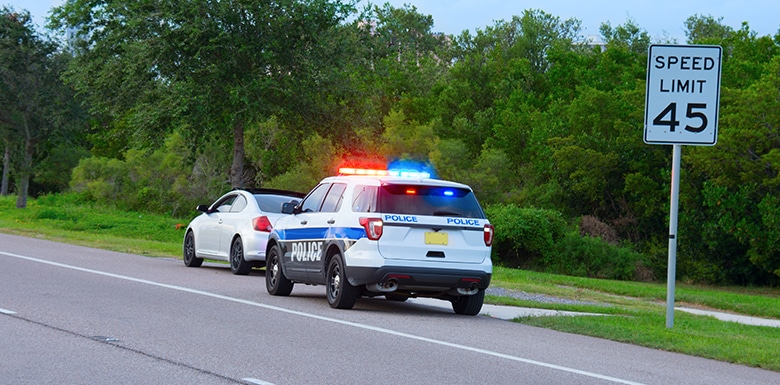
Ohio Traffic Stop Ruling Explained
If you get pulled over, you probably assume the stop has to rest on a correct reason. The recent Ohio traffic stop ruling complicates that idea. The Ohio Supreme Court said police can keep moving forward with a traffic stop even if the original reason turns out to be mistaken, as long as the officer made a reasonable error of fact. That matters now because traffic stops often lead to searches, arrests, and court fights over what counts as lawful police action. And for regular drivers, a small factual mistake at the start can turn into a much bigger legal problem. So what did the court actually say, and where are the limits? Here’s the part that deserves your attention. A mistaken stop is not automatically an illegal one under Ohio law.
What matters most
- The Ohio Supreme Court said a traffic stop can remain valid after a reasonable factual mistake by an officer.
- The key issue is whether the officer’s mistake was objectively reasonable, not whether it was later proven wrong.
- This ruling affects how evidence from a stop may be treated in court.
- For drivers, the decision gives police more room during roadside encounters.
What the Ohio traffic stop ruling says
The case covered a basic but high-stakes question. If an officer stops a car for something they believe is a violation, but later learns they were wrong, does the stop collapse?
The Ohio Supreme Court said no, not automatically. The court held that a stop can still satisfy the Fourth Amendment if the officer made a reasonable mistake of fact. That means the legality of the stop depends on what a reasonable officer could have believed in that moment, based on the facts they had, not on perfect hindsight.
Look, courts have long allowed some room for human error. Policing happens fast, often at night, often with limited visibility. The legal system does not require perfection. It requires reasonableness.
A traffic stop does not become unconstitutional just because the officer’s initial factual belief turns out to be wrong, if that belief was reasonable at the time.
Why the Ohio traffic stop ruling matters in real life
This is not some narrow procedural fight that only lawyers care about. Traffic stops are one of the most common ways people come into contact with law enforcement. According to the Bureau of Justice Statistics, millions of drivers are stopped by police each year in the United States. A stop can stay brief, or it can spiral into questioning, searches, citations, or arrests.
That is why this standard matters. If courts give officers room for reasonable factual mistakes, prosecutors have a stronger argument that evidence found during the stop should stay in the case.
That is the whole ballgame for many defendants.
Think of it like a referee in sports. Officials are allowed to make judgment calls in real time, and replay does not erase every decision just because a camera later shows a different angle. The justice system uses a similar idea here, though the stakes are obviously much higher than a bad call in the second quarter.
What counts as a reasonable mistake?
That is the hard question, and it is where future cases will be fought. A reasonable mistake is not the same as a lazy one. Courts usually look at the surrounding facts, including visibility, distance, road conditions, the officer’s vantage point, and what the officer knew at the time.
Examples might include:
- An officer reasonably believes a license plate is expired because it appears unreadable or shows the wrong color tag in low light.
- An officer thinks a vehicle matches a reported description, but later learns one detail was off.
- An officer believes a traffic violation occurred based on what they saw in fast-moving conditions, then later body camera or dash camera footage adds nuance.
But there are limits. If the mistake comes from poor training, a guess with no clear basis, or facts that no careful officer would read the same way, the stop may still be ruled unlawful.
Honestly, this is where many police-friendly rulings either hold up or fall apart.
What the ruling does not do
The decision does not give police a blank check. It does not say any mistaken stop is fine. It does not erase the Fourth Amendment. And it does not remove judicial review.
Courts still have to ask whether the officer’s belief was objectively reasonable. Defense lawyers can still challenge the stop, the officer’s account, the body camera footage, and the timeline. If the mistake looks thin or convenient, judges can reject it.
And that matters for public trust (which is already fragile in many communities). A legal standard that tolerates some mistakes may be workable. A standard that rewards sloppy police work is not.
How this affects drivers and defense strategy
If you are a driver in Ohio, this ruling means a stop may remain lawful even after the officer learns the original reason was wrong. That makes roadside behavior and later documentation more important.
Practical steps after a traffic stop
- Stay calm and avoid escalating the encounter.
- Pay attention to what the officer says was the reason for the stop.
- Write down details soon after, including time, location, weather, and what was said.
- Ask a lawyer quickly if the stop led to charges or a search.
For defense attorneys, the fight shifts to the quality of the officer’s mistake. Was it grounded in observable facts? Did video support the claim? Did the officer explain the mistake clearly and consistently? Those details can decide whether evidence stays in or gets tossed.
Why courts keep backing the reasonableness standard
There is a practical reason courts often return to this framework. The Fourth Amendment bars unreasonable searches and seizures, not all mistaken ones. That distinction sounds dry, but it shapes nearly every suppression hearing tied to a roadside stop.
But here’s the thing. “Reasonable” is one of the slipperiest words in American law. It gives courts flexibility, and it gives police room to act, but it can also stretch too far if judges stop asking hard questions.
That is the tension at the center of the Ohio traffic stop ruling. Police need enough discretion to do the job. Citizens need enough protection to keep that discretion from swallowing the rule.
Where the Ohio traffic stop ruling fits in the bigger debate
This ruling sits inside a broader national argument about police authority, evidence suppression, and constitutional limits during everyday encounters. State supreme courts and federal courts have often treated reasonable mistakes, especially factual ones, as compatible with lawful stops. So Ohio is not standing alone here.
Still, every state-level ruling sends a signal. This one tells officers that a factual error will not necessarily sink a stop. It also tells trial courts to focus less on whether the officer was correct and more on whether the officer was reasonable at the time.
Is that a sensible rule for messy real-world policing, or does it lower the bar too much? That question is not going away.
What to watch next
The next wave of cases will likely focus on the edges. How much evidence does an officer need before making a stop? How do judges weigh body camera footage against officer testimony? And when does a reasonable mistake start looking like a pattern of weak stops dressed up as good faith?
If you follow criminal law, civil liberties, or police procedure, keep an eye on those fact-heavy cases. They will decide how broad this Ohio rule becomes in practice. The opinion may sound narrow on paper, but roadside law is built one close call at a time.
This article is for educational purposes only and should not be considered medical advice. Always consult a qualified healthcare provider before making decisions about addiction treatment. If you or someone you know is in crisis, call SAMHSA's National Helpline: 1-800-662-4357 (free, confidential, 24/7).