Iowa Opioid Settlement Money: Why the Delay Matters
Iowa Opioid Settlement Money: Why the Delay Matters Iowa cities, counties, and service providers are waiting on Iowa opioid settlement money that was meant to…
Iowa Opioid Settlement Money: Why the Delay Matters
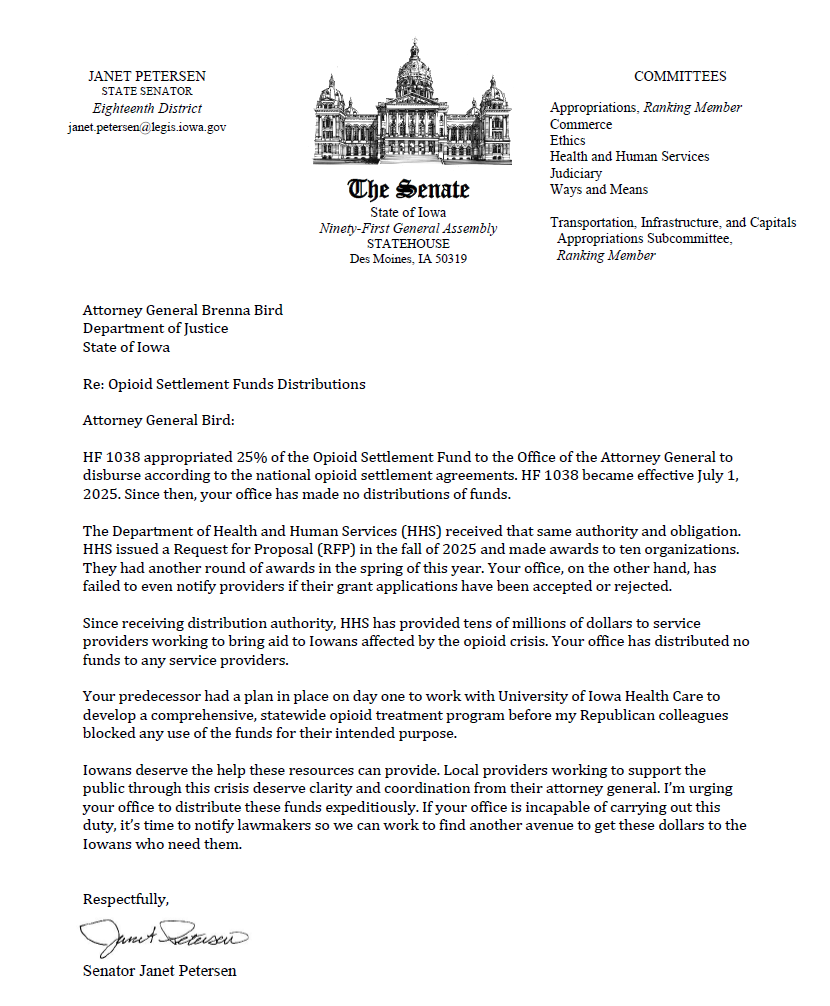
Iowa cities, counties, and service providers are waiting on Iowa opioid settlement money that was meant to support prevention, treatment, recovery, and harm reduction. That delay matters because the opioid crisis does not pause while government offices sort out paperwork, oversight, and priorities. Every month of drift can leave local programs guessing about staffing, contracts, and what they can afford to do next.
Senate Democrats have criticized the attorney general’s office for not disbursing the funds faster. That fight is about more than budgeting. It is about whether settlement dollars reach the people and places they were promised to help. And if you work in recovery, county government, or public health, you already know how thin the margin is.
What happens when money meant for crisis response sits unused? The answer is not abstract. It shows up in fewer outreach hours, slower expansion, and more pressure on already stretched providers.
What stands out about Iowa opioid settlement money
- The money was meant for local response. That includes treatment, prevention, recovery support, and related public health work.
- Delay changes planning. Counties and nonprofits cannot build services around funds they have not received.
- The dispute is political and practical. Lawmakers want accountability, but they also want the money moving.
- Transparency matters. Communities need to know where the funds are, how they are allocated, and when they will arrive.
Why the delay is more than a budget fight
Settlement money is supposed to fill gaps left by the opioid epidemic. That can mean naloxone distribution, peer support, medication-assisted treatment access, or outreach in places where overdoses are climbing. If funds stall, local leaders have to improvise (and improvising is expensive).
Think of it like building a roof after the rain starts. If the materials are in the warehouse but never delivered, the house still leaks. The policy intent may be sound, but the result is weak if the money never reaches the ground.
Settlement funds only work when they move. Delay turns public money into a promise on paper, not help in the field.
Iowa opioid settlement money and local accountability
Here’s the hard part. Settlement agreements often come with layers of control, reporting, and state-level decision-making. That can protect against waste, but it can also slow down delivery if the process becomes too rigid.
Lawmakers who criticize the delay are asking a fair question: who is being served by holding the money back? If the answer is no one, then the system needs a fix. Fast.
What local agencies need to plan well
- Release timelines. Providers need dates, not vague promises.
- Clear eligibility rules. Counties and nonprofits should know what expenses qualify.
- Simple reporting. Oversight is necessary, but paperwork should not choke the program.
- Stable funding windows. Short, uncertain grants make staffing nearly impossible.
What this means for treatment and recovery work
Delay hits treatment systems first. Clinics cannot add appointments if they do not know whether settlement funds will cover staff or supplies. Recovery groups face the same problem. They may see demand rising, but they cannot expand on a maybe.
That is especially risky in rural counties, where one open slot can make the difference between getting help now and waiting weeks. And waiting, in opioid care, can be deadly.
What lawmakers should ask next
Best practice is plain here. State officials should explain how much money is held, why it has not been sent, and what the next release date is. They should also publish a clean accounting of how Iowa opioid settlement money is being divided across local governments and service categories.
That kind of transparency is not a favor. It is the minimum standard for public trust.
Look, people do not need another speech about the opioid crisis. They need the funds to show up where they can do real work. If the attorney general’s office cannot move settlement dollars on time, then lawmakers should keep pushing until it does. What good is a settlement if the help arrives after the damage has already deepened?
This article is for educational purposes only and should not be considered medical advice. Always consult a qualified healthcare provider before making decisions about addiction treatment. If you or someone you know is in crisis, call SAMHSA's National Helpline: 1-800-662-4357 (free, confidential, 24/7).