Insurance Cuts and Drug Rehab Access
Insurance Cuts and Drug Rehab Access If you are trying to get help for addiction, the insurance maze can feel brutal. A drug rehab claim that should be simple…
Insurance Cuts and Drug Rehab Access
If you are trying to get help for addiction, the insurance maze can feel brutal. A drug rehab claim that should be simple can turn into delays, denials, and surprise bills, and that can stop treatment before it starts. Insurance cuts drug rehab access in a very direct way, and the damage shows up fast when someone needs detox, residential care, or outpatient support right now.
That matters because addiction does not pause while paperwork moves. Families lose time. Clinicians lose momentum. And patients can fall back into use while they wait for approval or fight an appeal. The Wall Street Journal has reported on insurers tightening payment decisions for rehab, which adds another layer of pressure to an already fragile system. So what should you watch for, and how do you push back when coverage narrows?
What insurance cuts drug rehab access looks like
- Preapproval delays that slow admission.
- Shorter stays than the treatment team recommends.
- Denials for residential care in favor of cheaper outpatient options.
- Higher out-of-pocket costs that push families to delay care.
- Narrow provider networks that limit where you can go.
These changes do not always look dramatic on paper. But they can shrink access in a quiet, relentless way. A plan may still say it covers addiction treatment, yet the fine print can make real care hard to reach.
Why insurers are tightening rehab coverage
Insurers usually say they are managing cost and making care fit medical necessity rules. That sounds tidy. But addiction treatment does not always move in neat, predictable blocks of time. A person can need more days after detox, or need residential care after an outpatient setback, and a rigid approval model can miss that reality.
The pressure is also financial. Substance use treatment claims can be expensive, especially for inpatient and residential programs. Some plans respond by requiring more documentation, more reviews, and more proof that a lower level of care will not work.
Think of it like an airline that keeps shrinking the overhead bin and then acts surprised when your suitcase no longer fits. The system changed. Your needs did not.
How the denial process usually works
Look, the denial often starts before treatment even begins. A facility submits clinical notes, the insurer reviews them, and the plan may ask for more records or decide the requested level of care is too high. Sometimes the insurer approves only a few days, then demands a fresh review before any extension.
That is where families get worn down. You are dealing with an illness that moves fast, but the coverage timeline moves slowly. Why should a person in crisis have to argue their case in fragments?
- Ask the provider for the exact reason for denial.
- Request the insurer’s medical necessity criteria in writing.
- Get the clinician to document symptoms, risks, and prior failed care.
- File the appeal quickly, since deadlines are short.
- Escalate to your state insurance department or external review if needed.
One single day can matter here.
How insurance cuts drug rehab access affects families
Families often feel the hit first. They may call several programs, find one that takes the plan, and then learn the approved stay is only a fraction of what the doctor recommended. That can force ugly choices, like paying privately, switching levels of care too soon, or skipping treatment altogether.
The harm is practical and emotional. Parents miss work. Partners scramble for child care. Siblings become coordinators. And if the person leaves treatment early because coverage ran out, everyone has to start over.
Here is the thing. Addiction treatment works best when it matches need, not when it matches an insurer’s spreadsheet. A detox bed is not the same as a full recovery plan, and outpatient care is not enough for every case.
What you can do if coverage is cut back
Push for documentation
Ask the treatment provider to spell out why a certain level of care is needed. Strong notes help. So do details about withdrawal risk, relapse history, mental health symptoms, and failed lower-intensity treatment.
Use the appeal process fast
Most plans have internal appeals, and many states allow external review after that. Keep copies of everything. Write down names, dates, and reference numbers. This is tedious work, but it can change the outcome.
Check for parity rights
The Mental Health Parity and Addiction Equity Act requires many insurers to treat mental health and substance use coverage comparably to medical and surgical care. If your plan puts up extra hurdles for rehab, that may be a parity issue worth challenging.
Ask about alternatives before giving up
Maybe the plan will not approve residential care, but it may cover intensive outpatient treatment, partial hospitalization, or a step-down program. Not ideal? Maybe. But it can keep care moving while you fight for more.
What to ask before treatment starts
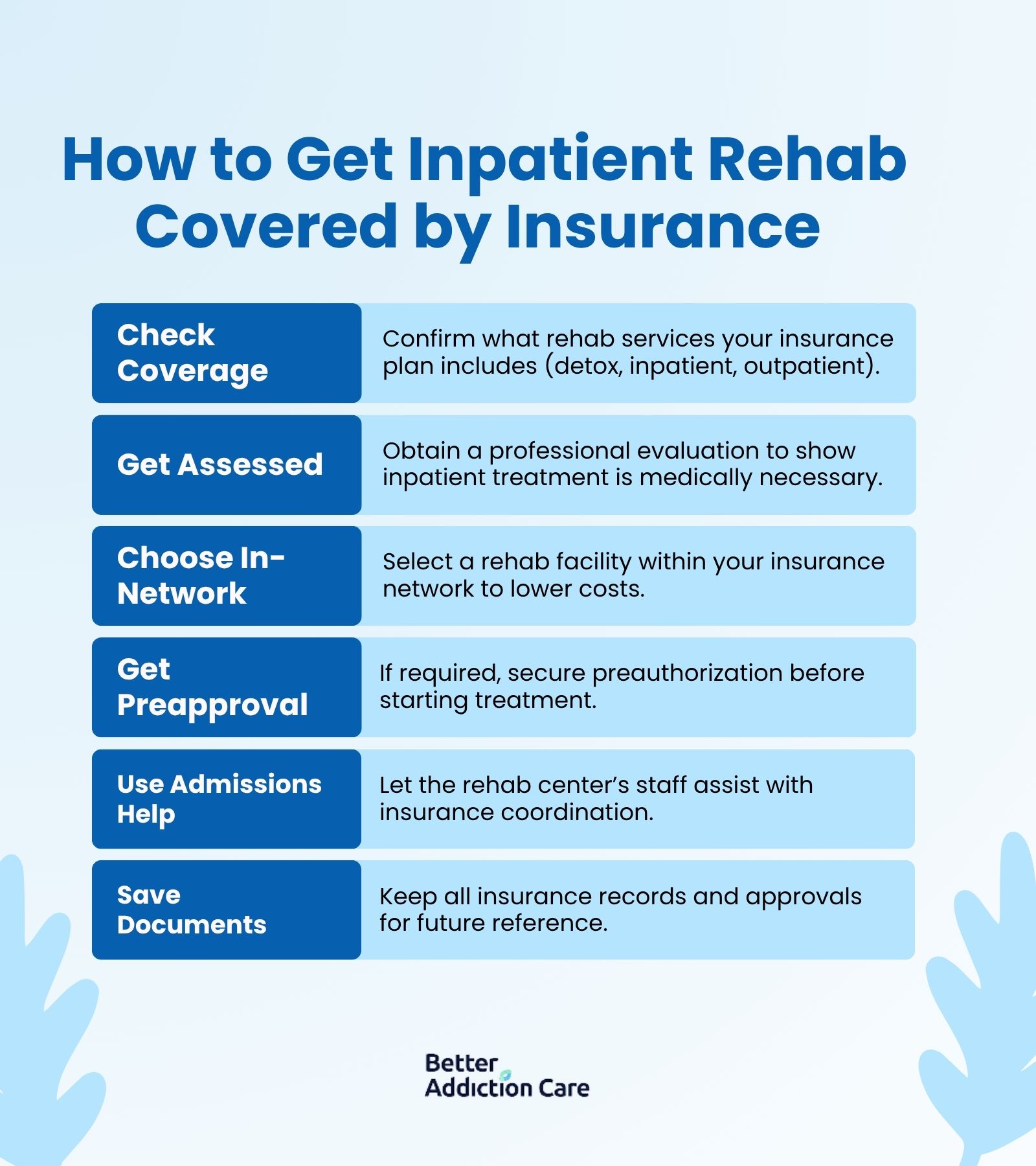
- Is this facility in-network?
- Do I need prior authorization?
- How many days are usually approved?
- What happens if the insurer denies more time?
- Who handles appeals, me or the provider?
Ask these questions early, before the first admission date if possible. It is a bit like checking the bridge load limit before driving a truck over it. You do not want to learn the hard way.
Where the system may be headed
The pressure on rehab coverage is not likely to vanish soon. Employers, insurers, and state regulators are all watching treatment spending, and that means more scrutiny for claims. Some insurers may keep narrowing approvals while publicly saying they support behavioral health access. Both things can be true at once.
That leaves patients and families doing more of the work. It should not be that way, but it is. The next real test is whether parity laws, appeals, and state oversight can keep coverage from drifting farther away from actual need.
What to watch next
If your plan starts making rehab harder to reach, do not assume the denial is final. Ask for the reason, get the records, and appeal fast. If the system is putting price ahead of care, the response has to be equally direct.
And if insurers keep cutting access, how many people will miss the window when treatment could still have worked?
This article is for educational purposes only and should not be considered medical advice. Always consult a qualified healthcare provider before making decisions about addiction treatment. If you or someone you know is in crisis, call SAMHSA's National Helpline: 1-800-662-4357 (free, confidential, 24/7).