Foreign Government Influencer Disclosure Bill Explained
Foreign Government Influencer Disclosure Bill Explained You scroll for health tips, parenting advice, news clips, and a little escape. Then a polished creator…
Foreign Government Influencer Disclosure Bill Explained
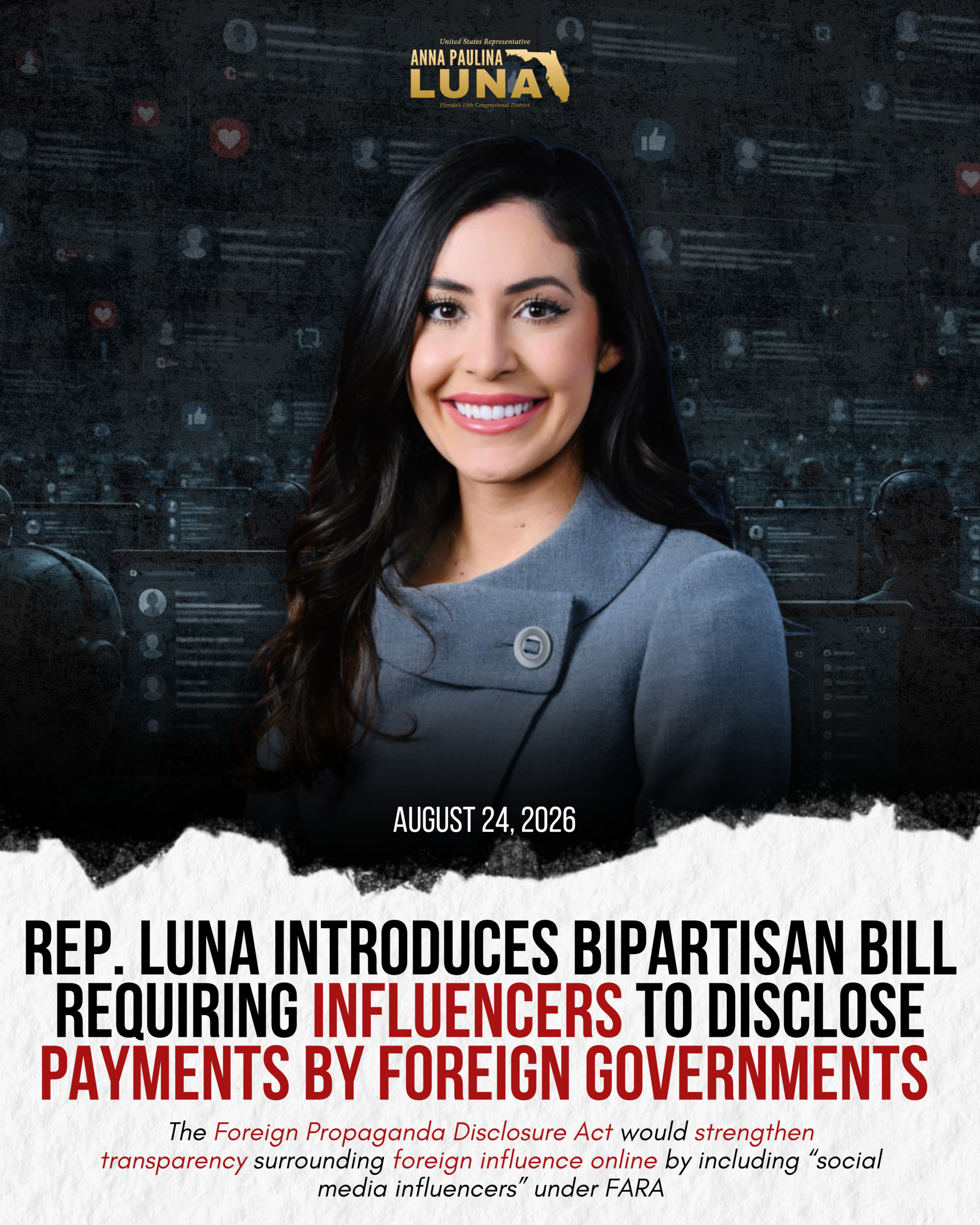
You scroll for health tips, parenting advice, news clips, and a little escape. Then a polished creator starts praising a foreign government, criticizing U.S. policy, or pushing a political talking point with no clear label. That is why foreign government influencer disclosure matters now. Rep. Anna Paulina Luna announced a bipartisan bill that would require influencers to disclose payments from foreign governments, according to her House office. The proposal targets a messy corner of social media where persuasion can look like everyday opinion. For families, clinicians, and anyone trying to protect their mental bandwidth, the issue is simple. You should know who paid for the message before you decide how much trust to give it.
What deserves your attention
- The bill would require influencers to disclose payments from foreign governments.
- It responds to a real trust problem, paid political messaging that can blend into lifestyle content.
- Disclosure does not ban speech. It gives viewers context before they share, argue, or worry.
- Parents and caregivers can use this debate to teach media literacy without turning every feed into a courtroom.
Why foreign government influencer disclosure matters
Social platforms have turned trust into a business model. A creator who talks to you from a kitchen table can feel more honest than a cable news panel, even when that creator is reading from a paid script.
The Luna bill speaks to that gap. The announcement says the proposal would require influencers to disclose payments by foreign governments, which is a narrower target than ordinary brand sponsorships or domestic political ads.
Paid influence is not the same as ordinary opinion. If a foreign government is paying for the message, the audience needs that fact before it decides what to believe.
Look, this is not about treating every unpopular view as foreign propaganda. People can support bad ideas for free. The problem is hidden payment, especially when the content touches elections, war, public health, protest movements, or social division.
Disclosure changes the power balance.
Think of it like nutrition labeling. A cookie can still be a cookie, but you get to see the sugar before you eat six of them. A paid political video should carry the same basic honesty, especially when the sponsor is a government with its own strategic goals.
How foreign government influencer disclosure could affect your feed
If the bill moves forward, the most visible change could be labels on sponsored posts, videos, podcasts, livestreams, or other paid creator content. The exact rules would depend on the final text, agency guidance, and enforcement.
That sounds dry, but the practical effect could be obvious. A viewer would not have to guess whether a glowing video about a foreign regime, a travel campaign, or a policy fight came from personal belief or a paid relationship.
What might count as an influencer?
Congress would need to define that carefully. A mega creator on YouTube is easy to picture, but what about a niche TikTok account, a paid Substack writer, or a podcaster with 8,000 loyal listeners?
That definition matters because influence is not only about follower count. A small creator with a devoted audience can move opinion inside a community faster than a celebrity who posts once and disappears.
What counts as payment?
Cash is the easy part. Harder cases may include free travel, production help, gifts, consulting contracts, or payments routed through a media firm (the paperwork is where these fights usually get ugly).
Good law has to catch the real money trail without punishing ordinary speech. That balance is non-negotiable if lawmakers want the rule to survive public pressure and legal scrutiny.
The mental health angle people miss
Hidden influence is not only a political problem. It can add stress, confusion, and distrust to feeds that already make many people feel overloaded.
For teens, anxious adults, and people in recovery from compulsive scrolling, a feed full of charged political content can keep the nervous system on alert. Add secret sponsorship by a foreign state and the content becomes even harder to judge.
What are you supposed to do when a creator you like suddenly becomes a source of international talking points? You do not need to panic, but you do need a filter.
- Pause before sharing content that sparks anger in the first five seconds.
- Check the caption, bio, and description for sponsorship language.
- Search the creator name plus terms like paid partnership, government, media contract, or foreign agent.
- Compare the claim with reporting from established outlets or primary sources.
- Ask whether the post gives evidence or only tries to trigger a reaction.
This is harm reduction for your attention. You are not trying to become a full-time investigator. You are adding friction before a paid message hijacks your mood or your group chat.
How this fits with existing disclosure rules
The Federal Trade Commission already expects clear disclosure when creators promote products for pay. That is why you see labels such as ad, sponsored, or paid partnership on consumer posts.
Foreign political influence sits near older transparency laws such as the Foreign Agents Registration Act, often called FARA. But social media has created a newer route, where a government can reach audiences through a trusted personality rather than an official embassy account.
The Luna proposal, based on the House announcement, is aimed at that creator layer. It does not appear to be a broad ban on viewpoints. It is a transparency measure, and that distinction matters.
What families and caregivers can do now
You do not have to wait for Congress to build better habits at home. The simplest rule is also the strongest, treat unlabeled political persuasion from influencers as incomplete information.
For parents, this can become a useful conversation instead of a lecture. Ask your teen why they trust a creator, what evidence the creator offers, and who benefits if the message spreads.
- Create a disclosure check. Before sharing a political clip, look for sponsor labels, pinned comments, link pages, and profile bios.
- Separate identity from evidence. A creator can feel relatable and still be wrong, paid, or careless.
- Watch for sudden topic shifts. A beauty, gaming, fitness, or travel account that abruptly pushes geopolitical content deserves a second look.
- Use the three-source rule. If a claim matters, compare it with at least three sources that are not repeating the same script.
- Protect your nervous system. If a feed leaves you angry, wired, or hopeless, step away before you keep reading.
Honestly, this is the same discipline I use as a reporter. Follow the money, read the source material, and do not confuse confidence with proof.
What lawmakers still need to answer
A good disclosure law needs teeth, but it also needs clean boundaries. Vague rules can chill speech, while weak rules become a sticker nobody reads.
The hard questions are practical. Who enforces the labels? What is the penalty for hiding a foreign government contract? Do platforms have duties, or only creators? How quickly must a disclosure appear?
There is also the platform problem. A label buried under a caption is like a warning sign hidden behind a vending machine. If the disclosure is not visible before the viewer engages, it may not do much.
The next step is media literacy with receipts
The foreign government influencer disclosure bill is worth watching because it targets a real blind spot in online persuasion. It will not fix misinformation by itself, and anyone selling it as a cure is overselling the case.
Still, transparency is a solid start. Until the rules catch up, make your own feed work harder for your trust, and ask one simple question before you share the next viral clip: who wanted me to believe this?
This article is for educational purposes only and should not be considered medical advice. Always consult a qualified healthcare provider before making decisions about addiction treatment. If you or someone you know is in crisis, call SAMHSA's National Helpline: 1-800-662-4357 (free, confidential, 24/7).